
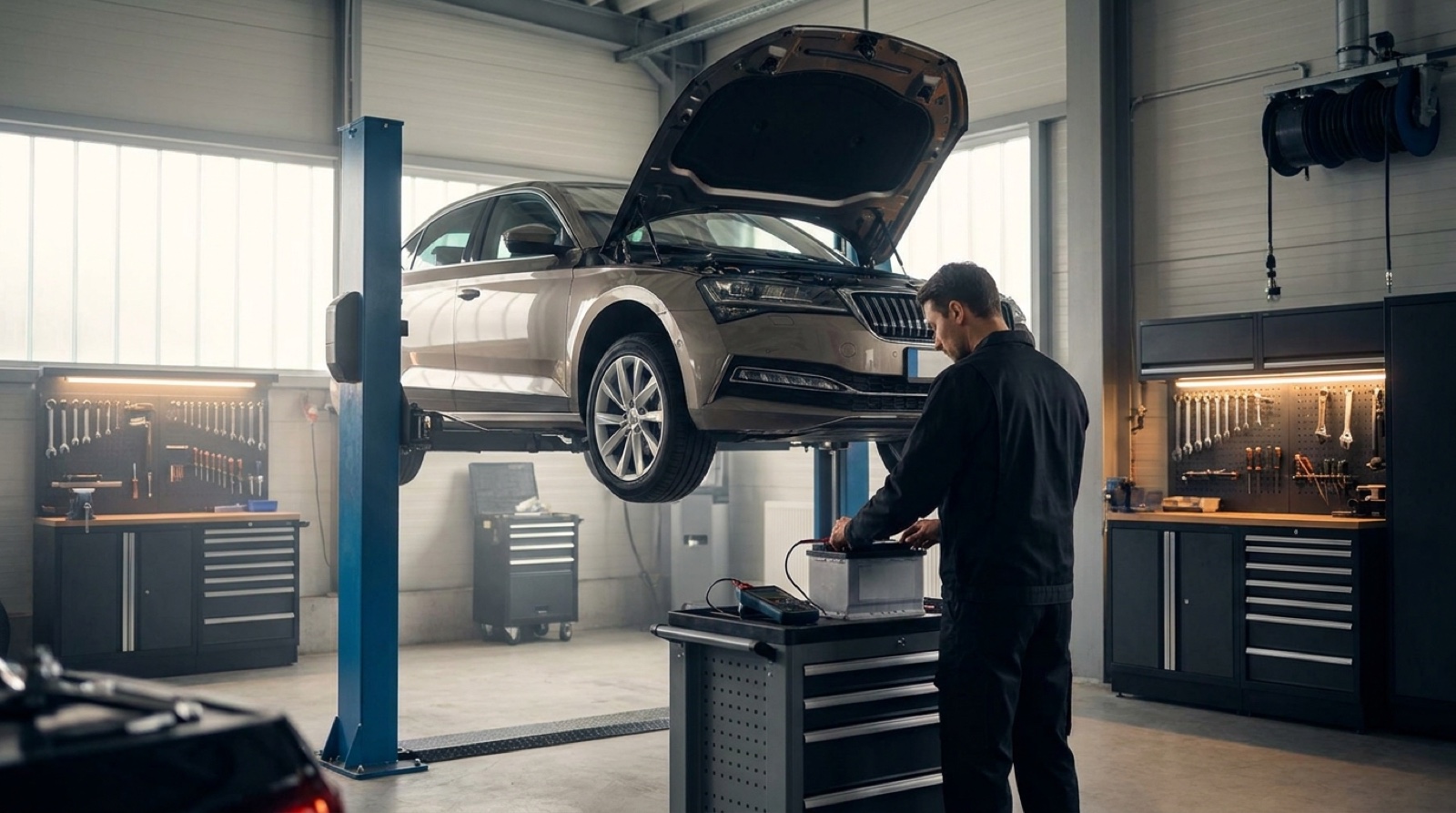
A car battery that would last five or six years in a mild climate often dies in two or three years here in Las Vegas. Extreme heat is the main reason.
Summer temperatures in the valley regularly push past 110 degrees. That heat does more damage to your battery than the coldest winter ever could.
How Desert Heat Destroys a Battery
A lead-acid battery works through a chemical reaction between lead plates and sulfuric acid. Heat speeds that reaction up in ways that wear the battery out.
High temperatures cause the liquid electrolyte inside to evaporate. Once fluid levels drop, the plates are exposed and begin to corrode.
Heat also accelerates a process called grid corrosion. The internal structure that holds everything together slowly breaks down, and there is no reversing it.
Here is the part most drivers miss. The damage happens in summer, but the battery usually fails on the first cold-ish morning of winter when it finally cannot deliver enough power to start the engine.
How Long Batteries Actually Last in Las Vegas
National averages do not apply to the desert. Where you park and how you drive make a real difference.
| Climate | Typical Battery Life |
|---|---|
| Mild, moderate temperatures | 4 to 6 years |
| Hot climate like Las Vegas | 2 to 3 years |
| Hot climate, always parked outdoors | 2 years or less |
If your battery is more than three years old and you live anywhere in the valley, it is living on borrowed time. That includes drivers in Spring Valley, Enterprise, Henderson, and Summerlin.
Warning Signs Your Battery Is Dying
A failing battery usually gives you clues before it strands you. Pay attention to these.
- Slow engine crank. The starter sounds sluggish or labored when you turn the key.
- Dim headlights. Lights that brighten when you rev the engine point to weak battery output.
- Electrical glitches. Flickering dash lights, slow power windows, or a radio that resets.
- Dashboard battery light. This warning can mean the battery or the charging system.
- Swollen battery case. A bloated or bulging case is a clear sign heat has done its damage.
- Corrosion on the terminals. White or blue buildup around the posts weakens the connection.
A slow crank on a hot afternoon is not something to ignore. It often means the battery is close to done.
Don't Confuse a Bad Battery With Other Problems
Not every no-start is the battery. Sometimes the battery is fine and something else is at fault.
If your battery keeps dying even after replacement, the charging system or a parasitic drain may be the real issue. A proper diagnostic check can tell the difference before you spend money on the wrong part.
A cranking engine that will not catch can also point to the starter rather than the battery. Testing removes the guesswork.
Learn more about what your warning lights are telling you in our guide on the check engine light.
How to Make Your Battery Last Longer in the Heat
You cannot beat the Nevada sun, but you can slow the damage. A few habits help.
- Park in the shade. A garage or covered spot lowers the temperature under the hood.
- Keep terminals clean. Corrosion-free connections let the battery charge and discharge properly.
- Drive regularly. Short trips and long idle periods leave a battery undercharged.
- Get it tested before summer. A quick load test tells you if the battery can survive another season.
Heat is hard on more than the battery. The same summer conditions strain your cooling system, so a coolant service and a working air conditioning system matter just as much when the temperature climbs.
When to Replace Your Battery
Replace the battery when it is more than three years old, when it fails a load test, or when you notice the warning signs above. Waiting rarely saves money and often leads to a breakdown.
The good news is that battery replacement is fast and affordable. Our team handles battery testing and replacement for drivers across Las Vegas, Paradise, and North Las Vegas.
If you are not sure whether the battery is the real problem, we will test the whole system and tell you straight. Reach out for a quote or to book a visit, and we will get you back on the road before the next heat wave leaves you stranded.