
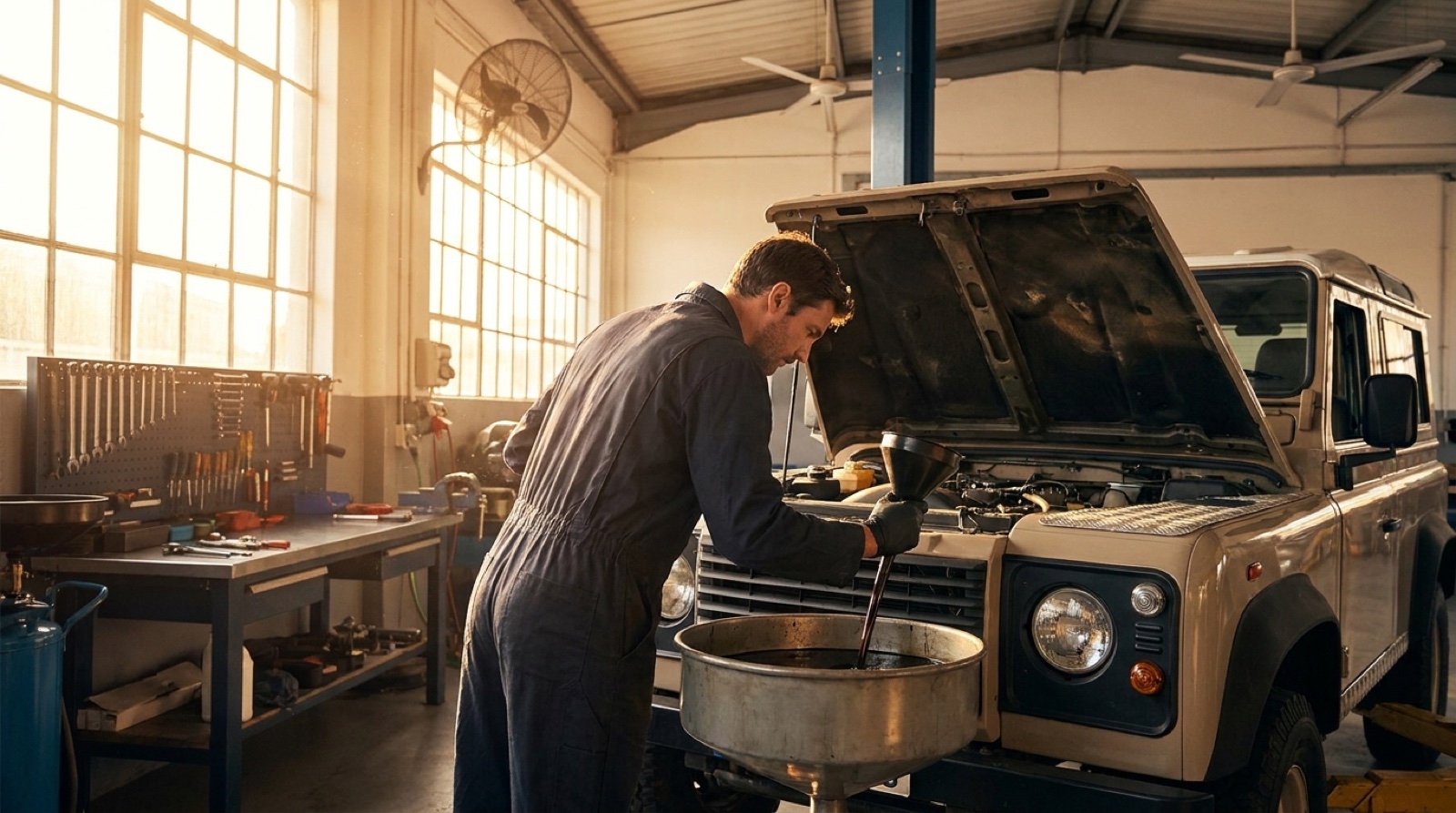
Most Las Vegas drivers should change conventional oil every 3,000 to 5,000 miles and full synthetic oil every 7,500 to 10,000 miles. In our desert climate, aim for the lower end of whatever range applies to your vehicle.
Heat is the reason. Oil breaks down faster when it runs hot for long stretches, and summers in the valley run hot for months.
Why Las Vegas Heat Changes the Math
Engine oil is designed to work within a temperature window. When ambient temperatures climb past 105 degrees, your engine and the oil inside it run hotter than the manufacturer assumed for average conditions.
That extra heat speeds up oxidation. Oxidized oil thickens, loses its ability to coat parts, and leaves deposits behind.
Stop-and-go traffic on Interstate 15 or the 215 Beltway makes it worse. Idling in summer heat means the engine keeps generating warmth without much airflow to shed it.
Short trips around Spring Valley or Enterprise are also hard on oil. The engine never fully warms up long enough to burn off moisture and fuel that collect in the crankcase.
What breaks oil down faster here
- Sustained triple-digit summer temperatures
- Long idle times in traffic and drive-thru lines
- Fine desert dust that works past air filters
- Frequent short trips that never reach full operating temperature
Synthetic vs. Conventional Intervals
Full synthetic oil holds up to heat far better than conventional oil. Its molecules are more uniform, so it resists breaking down when temperatures spike.
Conventional oil is cheaper up front but needs changing more often, especially in a climate like ours. For many Las Vegas drivers, synthetic ends up being the better value once you factor in the longer interval.
| Oil type | Typical interval | Las Vegas recommendation |
|---|---|---|
| Conventional | 5,000 miles | 3,000 to 4,000 miles |
| Synthetic blend | 6,000 miles | 4,000 to 5,000 miles |
| Full synthetic | 10,000 miles | 7,500 miles |
Always check your owner's manual for the grade and type your engine requires. If your vehicle calls for full synthetic, do not downgrade to save money, because it can void coverage and harm the engine.
A proper oil and filter change replaces both the oil and the filter so contaminants do not carry over into the fresh oil.
Signs You Are Overdue
Mileage is a guideline, not a guarantee. Watch for these signals that your oil needs attention sooner.
- The oil life or change light comes on
- Oil on the dipstick looks dark, gritty, or smells burnt
- The engine runs louder or you hear ticking on startup
- You notice a burnt oil smell inside the cabin
If a warning light appears and you are not sure what it means, a check engine light diagnosis can pinpoint the cause before it becomes expensive. Low or degraded oil can trigger other trouble, so it is worth confirming.
Don't Forget the Rest of Your Fluids
Oil is not the only fluid fighting the desert heat. Coolant carries heat away from the engine, and it degrades over time just like oil does.
If your engine has been running hot, a coolant system flush restores the cooling system's ability to protect against Las Vegas summers. Fresh coolant and fresh oil work together to keep temperatures in check.
Your air conditioning takes a beating here too. Drivers who notice weak airflow often need an air conditioning recharge to stay comfortable through July and August.
A simple summer maintenance rhythm
- Change oil on the shorter interval during summer months
- Check coolant level and condition at each oil change
- Inspect belts and the battery before peak heat arrives
- Keep tires rotated so wear stays even
Pairing an oil change with a tire rotation is an easy way to stretch the life of both your engine and your tires while you are already in the shop.
How We Handle It at Leavitt's Auto Care
We serve drivers across Las Vegas, Summerlin, Henderson, Paradise, and North Las Vegas. When you bring a vehicle in, we match the oil to your engine and your driving habits.
A daily commuter that sits in Decatur Boulevard traffic needs a different schedule than a weekend cruiser. We set an interval that fits how and where you actually drive.
If you are not sure when your last change was, we can check the oil condition and get you back on track. Reach out to get a quote or ask a question and we will help you plan the right schedule for our climate.
Staying ahead of oil changes is one of the cheapest ways to protect an engine from the demands of Nevada heat. A little attention now saves a large repair later.