
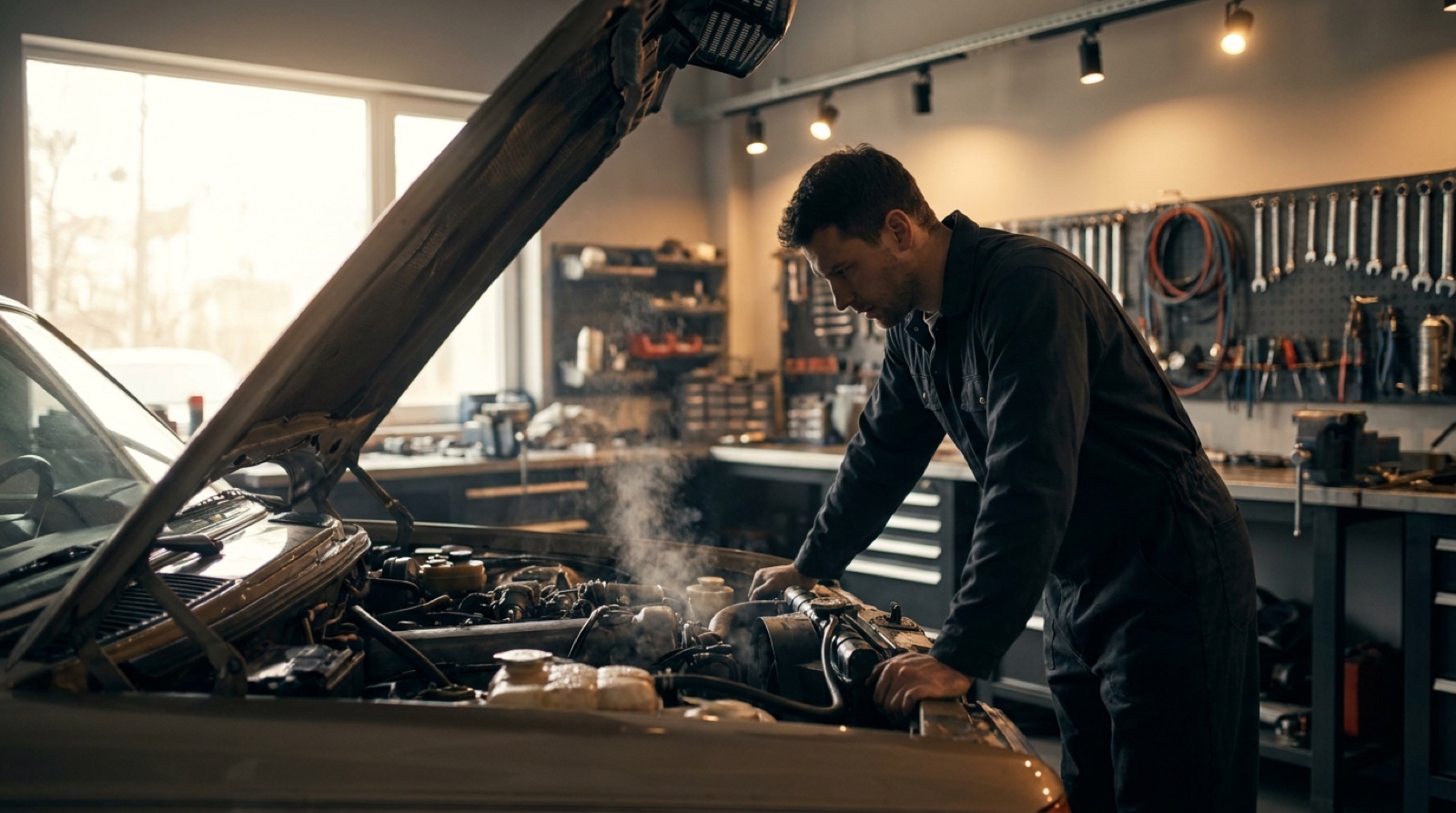
Most vehicles need a radiator flush every 30,000 to 50,000 miles, or every three to five years, whichever comes first. In Las Vegas, the shorter end of that range is usually the right call.
Coolant is not a permanent fluid. It breaks down with heat cycles, and our summers deliver more heat cycles at higher temperatures than almost anywhere else in the country.
Why Las Vegas Is Harder on Coolant Than Most Places
Coolant does two jobs. It moves heat away from the engine, and its additive package coats the inside of the radiator, water pump, and engine passages to stop corrosion.
Those additives are consumed over time. High operating temperatures burn through them faster.
A car sitting in stopped traffic on the 215 in July is asking the cooling system to work at full capacity with almost no airflow through the grille. Add a climb up to Mount Charleston or a loaded trip toward Boulder City and the load goes higher still.
Vehicles that live in Summerlin, Enterprise, or Spring Valley and rarely leave the valley still rack up heat hours. Short trips across town never let the system settle into a steady temperature, which is its own kind of stress.
Typical Flush Intervals by Coolant Type
Not all coolant is the same. Check your owner's manual for the specific type your vehicle uses, because mixing incompatible coolants causes gelling and blockage.
| Coolant Type | Common Color | Typical Interval | Las Vegas Adjusted |
|---|---|---|---|
| IAT (older green) | Green | 2 years / 30,000 mi | 2 years / 24,000 mi |
| OAT (long life) | Orange, red, pink | 5 years / 100,000 mi | 4 years / 75,000 mi |
| HOAT | Yellow, blue, turquoise | 5 years / 100,000 mi | 4 years / 75,000 mi |
These are starting points, not rules. Towing, older vehicles, and cars parked outside all day shift the interval earlier.
Signs Your Coolant Is Overdue
The Coolant Has Changed Color
Fresh coolant is bright and translucent. Old coolant turns dull, muddy brown, or rusty orange.
If you can see particles floating in the reservoir, the corrosion protection is already gone and metal is coming apart inside the system.
The Temperature Gauge Creeps Up
A gauge that used to sit dead center and now reads a needle width higher in traffic is telling you something. Degraded coolant transfers heat less efficiently, and scale buildup narrows the radiator passages.
The Heater Blows Cool in Winter
The heater core is a small radiator fed by the same coolant. It clogs before the main radiator does because its passages are narrower.
Weak heat on a cold January morning in North Las Vegas is often the first symptom of a system full of debris.
Sweet Smell or Visible Residue
Ethylene glycol has a distinctly sweet odor. Smelling it near the front of the car, or finding crusty white, green, or orange residue around hose clamps and the radiator neck, means coolant is escaping.
You Are Adding Coolant Regularly
A sealed cooling system should not consume coolant. Topping off every few months points to a leak, a failing radiator cap, or a head gasket problem worth investigating before it escalates.
What Happens If You Skip It
Corrosion is the real cost. Once the additive package is exhausted, the coolant becomes mildly acidic and starts eating aluminum, solder joints, and gaskets from the inside.
- Radiator failure. Internal scale blocks flow and the core develops pinhole leaks.
- Water pump wear. Abrasive debris chews through the seal and bearing.
- Thermostat sticking. Sediment prevents it from opening fully, causing overheating at highway speed.
- Heater core clogging. Replacement often means pulling the dashboard, which is expensive labor.
- Head gasket damage. A single serious overheat can warp a cylinder head.
A complete coolant system service costs a fraction of a water pump job and a small fraction of head gasket work. It is one of the clearest examples of maintenance paying for itself.
Flush Versus Drain and Fill
A drain and fill empties the radiator and refills it. That leaves roughly a third of the old coolant sitting in the engine block and heater core.
A proper flush circulates cleaner through the entire system, pushes out sediment, and replaces nearly all of the fluid. On a vehicle that has gone too long, only a full flush actually clears the buildup.
We also pressure test the system and inspect hoses, the cap, and the radiator itself during the service. Brittle hoses and a weak cap are common failure points on cars that have baked through several Las Vegas summers.
Related Heat Related Wear
Cooling system parts rarely age alone. The same heat that cooks coolant also hardens rubber and stresses electrical components.
Rubber components under the hood take the worst of it. Ask us to look at the serpentine belt condition at the same time, since the belt drives the water pump on most engines and a failure there means immediate overheating.
Heat also shortens battery life dramatically, so a battery check or replacement is worth bundling into the same visit. If your air conditioning has also been struggling, an A/C system inspection pairs naturally with cooling system work because both rely on the same front end airflow and condenser fans.
And if the temperature warning has already triggered a dash light, get a code scan done before assuming the coolant is the only issue.
Getting It Done
If you cannot remember the last time your coolant was replaced, it is due. Cars in the valley routinely arrive with original factory coolant at 80,000 miles and a radiator full of rust.
Our shop on S Decatur Blvd serves drivers across Las Vegas, Paradise, Henderson, and the surrounding valley. Call (702) 555-0100 or reach out for a quote and we will check your coolant condition, test the freeze and boil protection, and tell you honestly whether it needs service now or can wait.